 by Patty de Llosa
Contrast is crucial, bright/dark, sound/silence. We always forget our deep need for quiet as we go thru our day of achieving, solving, hesitating, and wondering if we’ve done all we should. How refreshing a change would be right then, in the middle of the action!
Well, how about it? What if you could stop to listen at any time, over coffee, while brushing your teeth, even at your desk, leaving off focusing on your papers or computer? You could close your eyes and imagine for a moment that there’s another way of functioning. What would you notice? What would you hear? Perhaps your own heart beating and your own soul calling you home.
Unfortunately, without being aware of it, we often allow ourselves to function in an automatic stimulus-reaction mode that leaves no room for conscious awareness. The pressures of life and our habitual patterns rule our choices until it seems nothing new is possible.
However, new findings in neuroscience show that changing how we do what we do is as important for our wellbeing as eating the right food. Studies in neuroplasticity indicate how new impressions stimulate and even feed our neurons. It’s time to celebrate the fact that what we think changes the physical structure of our brain. When we change our minds, we change our brain.
Dr. Jeffrey Schwartz, a practicing neuropsychiatrist affiliated with UCLA, and author of Brainlock, works with people who have obsessive-compulsive disorder (OCD) by teaching them to change their thinking through a specific four-step program. Well, friends, when you look at it you’ll see that his program could apply to all of us if we want to live more consciously!
The first step is to Relabel your thought, feeling, or behavior—to give it another name. For example that’s what I did some years back when I identified the voice I’d assumed was my conscience to be a tyrannical inner judge (See Taming Your Inner Tyrant). As you recognize and separate out what’s really important to you, you can begin to call some of your drives what they really are, compulsions. They aren’t just another habit, but much stronger, and they live on your energy. In other words, they eat you.
The second step would be to Reattribute what you want to change by calling it by its new name, which could be Automaton, Habit, Tyrant, Mealy-Mouthed Complainer, or any juicy expletive that resonates with you and helps wake you up to its presence.
Dr. Schwartz suggests that the third step, where the real work is, would be to Refocus, replacing your thought or behavior with a new action. What’s more, your brain chemistry will create new patterns of behavior if you can stick at it long enough. As Schwartz explains, “The automatic transmission isn’t working, so you manually override it. With positive, desirable alternatives—they can be anything you enjoy and can do consistently each and every time—you are actually repairing the gearbox. The more you do it, the smoother the shifting becomes. Like most other things, the more you practice, the more easy and natural it becomes, because your brain is beginning to function more efficiently, calling up the new pattern without thinking about it.”
The fourth and final step is to Revalue. As you begin to understand that the old patterns never really worked for you and another way of living is possible, even desirable, the intensity of need for that particular behavior diminishes. You become a happier and healthier human being. This methodology, dear friends, is truly exciting! You can work at any moment to change the chemistry of your brain!
Here are a few exercises you might try:
- Begin to notice which of the demands that come at you in your day you jump to respond, and which you hold back from. Maybe you are like me, good at making to-do lists, but more involved in checking items off than in prioritizing them. When I’m overwhelmed with my list, a couple of questions can help me bring balance to my day: What do I need to do right now? What do I want to do right now? They may not be the same.
- Let it ring. The telephone is our ever-present means of communication with the world. But we don’t have to be its slaves though I sometimes question the intensity of my focus on it. OK, maybe my job is to answer it, but I can begin to take charge of the automaton in me who wants to grab it at the first ring. Try this: Let it ring three times as you allow the sound to penetrate (and perhaps irritate) your newly aware body/mind, then pick it up and respond. Another time, wait two rings, or four. Anything to stay alive to where you are in time and space.
- One way of refreshing your outlook is to take a different route. Whether walking to the subway, driving to the office or taking time for a brisk walk, go a different way, forge a new path. Why does it matter? Ask the nearest neuroscientist!
- When you are at home, the same wake-up-and-live methodology applies. Invite yourself to put on the other shoe first for a week, then change back. Use your other hand to pour the coffee or hold the knife or fork.
- Finally, the uber neuro-improvement challenge will be to experiment with writing with your other hand. Becoming ambidextrous is a royal road to refreshing the brain. So is learning a new language. Investigate crossword puzzles, jigsaw puzzles, brain teasers.
This post appeared originally at Patty de Llosa's blog.
[author] [author_image timthumb='on']http://www.acatnyc.org/main/wp-content/uploads/2016/04/dellosa.jpg[/author_image] [author_info]PATTY DE LLOSA, author of "The Practice of Presence: Five Paths for Daily Life," "Taming Your Inner Tyrant: A path to healing through dialogues with oneself", "Finding Time for Your Self: A Spiritual Survivor’s Workbook," and co-editor of "Walking the Tightrope: The Jung-Nietzsche Seminars as Taught by Marion Woodman" is a Tai Chi and Alexander teacher who lives and practices in New York City. A contributing editor of Parabola magazine, she has studied many spiritual teachings while making her living as a mainstream journalist at Time, Leisure and Fortune, and raising a family. Visit her blog at www.findingtimeforyourself.com
 by Emily Faulkner
This past February, I had the good fortune to travel to the Alps to take Erik Bendix’ one week Ease on Skis workshop. I am a passionate skier, and not too bad at it, but having started skiing late in life, I am always frustrated by how slowly I seem to progress and how hampered I am by fear. As a dancer, I love to move. The technique of skiing - the rhythm and the fluid motion – is magical when it comes together, but frustratingly elusive. As soon as I approach a pitch that seems too steep, a patch of ice, or some unexpected bumps, fear takes over, my technique goes out the window, and skiing becomes a matter of survival instead of joy. The Alexander Technique is, of course, the perfect medium by which to analyze fear and response. Enter Ease on Skis!
by Emily Faulkner
This past February, I had the good fortune to travel to the Alps to take Erik Bendix’ one week Ease on Skis workshop. I am a passionate skier, and not too bad at it, but having started skiing late in life, I am always frustrated by how slowly I seem to progress and how hampered I am by fear. As a dancer, I love to move. The technique of skiing - the rhythm and the fluid motion – is magical when it comes together, but frustratingly elusive. As soon as I approach a pitch that seems too steep, a patch of ice, or some unexpected bumps, fear takes over, my technique goes out the window, and skiing becomes a matter of survival instead of joy. The Alexander Technique is, of course, the perfect medium by which to analyze fear and response. Enter Ease on Skis!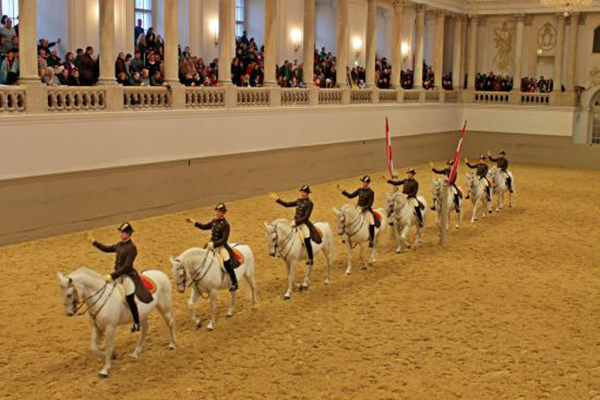 by Patty de Llosa
Hurrying speeds us away from the present moment, expressing a wish to be in the future because we think we’re going to be late. To counter it, Master Alexander teacher Walter Carrington told his students to repeat each time they begin an action: “I have time.” He tells us that on his visit to the Spanish Riding School of Vienna, where horses and riders are trained to move in unison, the director ordered the circling students to break into a canter, adding, “What do you say, gentlemen?” And they all replied together, “I have time.” Try it yourself sometime when you’re in a hurry. Send yourself a message to delay action for a nano-second before jumping into the fray.
by Patty de Llosa
Hurrying speeds us away from the present moment, expressing a wish to be in the future because we think we’re going to be late. To counter it, Master Alexander teacher Walter Carrington told his students to repeat each time they begin an action: “I have time.” He tells us that on his visit to the Spanish Riding School of Vienna, where horses and riders are trained to move in unison, the director ordered the circling students to break into a canter, adding, “What do you say, gentlemen?” And they all replied together, “I have time.” Try it yourself sometime when you’re in a hurry. Send yourself a message to delay action for a nano-second before jumping into the fray.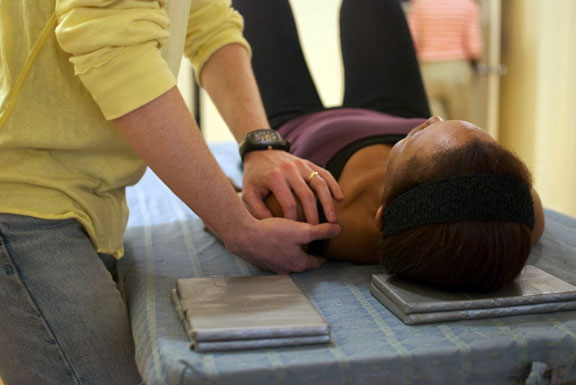 by Brooke Lieb
When I was taking private lessons, I had no idea how my teacher was facilitating changes in my sense of ease and freedom, I just knew it was different from anything I had ever experienced. I recognized some of it was what what she told me to think and wish for, but it seemed most of the changes were the result of some mysterious and magical quality in her hands.
by Brooke Lieb
When I was taking private lessons, I had no idea how my teacher was facilitating changes in my sense of ease and freedom, I just knew it was different from anything I had ever experienced. I recognized some of it was what what she told me to think and wish for, but it seemed most of the changes were the result of some mysterious and magical quality in her hands. by Emily Faulkner
 by Karen Krueger
Many Alexander Technique teachers don't like to even mention the word "posture." They think the very word has so many wrong connotations that it should be avoided. But I take Humpty Dumpty's point of view: the important thing is not what people think a word might mean, but what we say it means:
by Karen Krueger
Many Alexander Technique teachers don't like to even mention the word "posture." They think the very word has so many wrong connotations that it should be avoided. But I take Humpty Dumpty's point of view: the important thing is not what people think a word might mean, but what we say it means: by Karen Krueger
I've been reading a lot lately about "vocal fry," a speaking mannerism that some people find extremely annoying and others defend as an innovative trend among influential young women. Vocal fry is a gravelly or creaky sound to the voice that is most clearly heard at the ends of words and phrases. Some people call it "the NPR voice." Others trace it to Kim Kardashian.
by Karen Krueger
I've been reading a lot lately about "vocal fry," a speaking mannerism that some people find extremely annoying and others defend as an innovative trend among influential young women. Vocal fry is a gravelly or creaky sound to the voice that is most clearly heard at the ends of words and phrases. Some people call it "the NPR voice." Others trace it to Kim Kardashian. By Jeffrey Glazer
 by Brooke Lieb
 by Witold Fitz-Simon
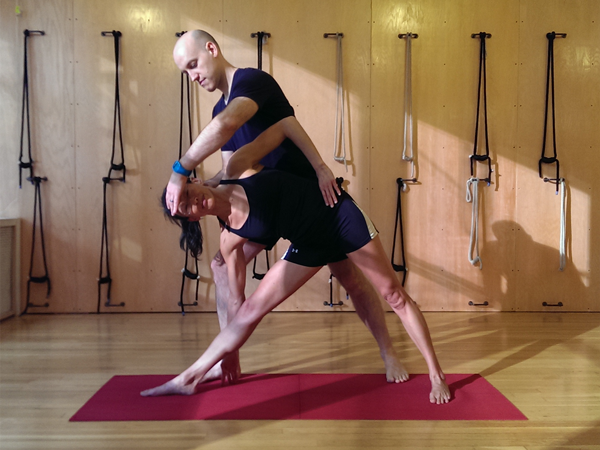
Yoga teachers giving adjustments has become a
by Witold Fitz-Simon
Yoga teachers giving adjustments has become a  by Witold Fitz-Simon
In genre fiction, movies and TV, there is a type of story known as the procedural. The classic version of this type of story is the Police Procedural, best exemplified by the TV show “Law & Order.” The crime is committed and the detective is on the case, using forensics to search out cues, canvassing the neighborhood for potential witnesses and piecing together the truth. A good police procedural can be riveting. Each clue uncovered, each witness questioned can build up to a fascinating portrait of passion, of greed, of intrigue. The Alexander Technique can make your mundane daily routine just as interesting, even without the drama!
by Witold Fitz-Simon
In genre fiction, movies and TV, there is a type of story known as the procedural. The classic version of this type of story is the Police Procedural, best exemplified by the TV show “Law & Order.” The crime is committed and the detective is on the case, using forensics to search out cues, canvassing the neighborhood for potential witnesses and piecing together the truth. A good police procedural can be riveting. Each clue uncovered, each witness questioned can build up to a fascinating portrait of passion, of greed, of intrigue. The Alexander Technique can make your mundane daily routine just as interesting, even without the drama! by Jeffrey Glazer
Recently, I realized that it’s been years since I’ve spent a dime on efforts to get myself out of pain.
by Jeffrey Glazer
Recently, I realized that it’s been years since I’ve spent a dime on efforts to get myself out of pain.
 by Dan Cayer
I’m not against correcting our posture or body on principle. I wish all it took to rid ourselves of chronic pain and tension was figuring the right angle or position, and tapping our body into place. It’s such a seductive offer; that we need only arrange our body and then get on with the rest of our day.
by Dan Cayer
I’m not against correcting our posture or body on principle. I wish all it took to rid ourselves of chronic pain and tension was figuring the right angle or position, and tapping our body into place. It’s such a seductive offer; that we need only arrange our body and then get on with the rest of our day. by Witold Fitz-Simon
 by John Austin
There have been
by John Austin
There have been