 by Anastasia Pridlides
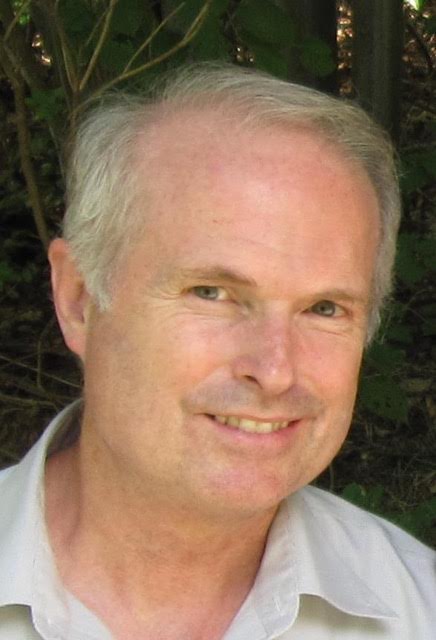
We are so pleased to have visiting teacher Bob Britton presenting a workshop—"Tuning Direction"—and there is still space for you to join us at ACAT on Saturday May 14th at 1pm. In advance of him joining us in our space we thought we would ask him a few questions to introduce him to the community.
Q. How long have you been teaching?
A. I first started taking lessons in 1974, and graduated as an Alexander Technique teacher in 1978.
Q. What was your first exposure to the Alexander Technique?
A. I first experienced the Alexander Technique because I had a knee injury as a result of sitting intensively in Zen meditation. A friend recommended that I try taking a lesson with Frank Ottiwell after I found out that the surgery for my knee injury would be a major operation. As soon as I walked into the lesson Frank noticed that my habitual style of walking was awkward because I habitually carried my right foot pointing out to the side ever since I had broken my leg when I was 10 years old. Frank asked me to completely relax my leg and then to drop the foot to the floor. My foot came down pointing straight ahead. Frank then asked me to take a step and I put it down with the toe facing out to the side. Frank said, “You see the foot knows where it wants to go, but you think the foot should be pointing out to the side.” I was amazed that what I was doing with my foot would make a difference in my knee. Gradually after six weeks of lessons my foot gradually came back around to pointing ahead as Frank introduced me to the larger organization of my whole body. Then the knee problem basically took care of itself and healed. I was impressed!
Q. What made you decide to become a teacher of this work?
I was not planning on becoming an Alexander teacher while I trained. I really was training to deepen my own experience of this marvelous work. After I graduated many people started coming up to me with ailments and the Technique was quite successful in helping them out. So when I left the Zen community it was a very natural choice to pursue the way of life of being an Alexander teacher.
Q. What most excites you about your upcoming workshop at ACAT?
A. Teaching workshops in the Alexander Technique is always energizing and gratifying. Somehow, thanks to human evolution, when we are sharing knowledge and skills about moving with more grace and efficiency everyone has a chance to experience joy and satisfaction. This is because our nervous systems are not neutral about the experience of moving with more efficiency. If we are moving with more skill we have more of a chance of survival, and the nervous system rewards us with endorphins. Of course working with old friends and new teachers who want to learn is always is a delight.
Q. What is your favorite way to engage with the AT in your daily life right now?
A. My favorite way of engaging with the Technique is organizing myself dynamically upward each morning, and throughout the day, especially by allowing my ribs to move buoyantly upward and engaging with the engaging with the environment around me. Meeting life from a dynamic and energetic organization is a true pleasure.
Q. What is most fascinating to you about the AT today?
A. Our human vertebrate structure is very, very old, and tuning into its beauty and brilliance is constantly refreshing. In addition, I love refining and finding more depth and sophistication in Alexander’s work.
Q. What is the most surprising effect your study of the AT has had on your life?
A. My experience is that everything changes with our posture. When our posture is dynamic, expanded, and engaged with our environment, the freshness of being happens. This is possible in every moment. The Alexander Technique is the best thing we can do in the present moment to improve our quality of being.
Q. Tell us about an interest/skill/passion of yours other than of the Alexander Technique.
A. One passion I am following now is going out with my local astronomy club to observe our Universe from dark sky locations. To be peering through my telescope and suddenly see the light from a distant galaxy that left there millions of years ago and now is arriving inside of my eye, is a rather awesome experience.
About Bob
Robert Britton graduated in 1978 from the Alexander Training Institute-SF (Frank Ottiwell and Giora Pinkas). In addition to his private practice in San Francisco, he has taught the Alexander Technique to musicians at the San Francisco Conservatory of Music since 1984. He served as the Chairman of the American Society for the Alexander Technique, and was a director of the 2011 International Congress of the Alexander Technique. He has helped train Alexander Technique Teachers since 1989, and regularly gives workshops to Alexander Teachers around the World.Find out more about Bob at uprighthuman.com
There are still a few spaces left in Bob's workshop. Go here to find out more and to register.
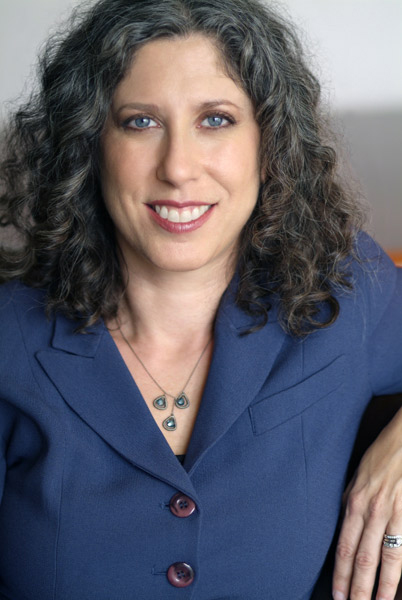
[author] [author_image timthumb='on']http://www.acatnyc.org/main/wp-content/uploads/2014/05/Anastasia.jpg[/author_image] [author_info]ANASTASIA PRIDLIDES teaches Alexander Technique, Bellydance and Yoga in New York City. Studying the Alexander Technique has been a deeply transformative and life changing process for her. Every day she wakes up excited to know that her job is share it with others. You can find her at movementhealingarts.com[/author_info] [/author]
 by Dan Cayer
A couple years ago, a quiet 17-year-old who I’ll call Len, was referred to me by his mother for a course of Alexander Technique lessons. She had heard that the AT could improve his posture and help him focus. Nearly 6’4” – and still growing – he stood and sat with a pronounced slump, which was likely contributing to back pain. His mother also suspected that his slouch was, partially, an attempt to not “stick out” at school.
by Dan Cayer
A couple years ago, a quiet 17-year-old who I’ll call Len, was referred to me by his mother for a course of Alexander Technique lessons. She had heard that the AT could improve his posture and help him focus. Nearly 6’4” – and still growing – he stood and sat with a pronounced slump, which was likely contributing to back pain. His mother also suspected that his slouch was, partially, an attempt to not “stick out” at school.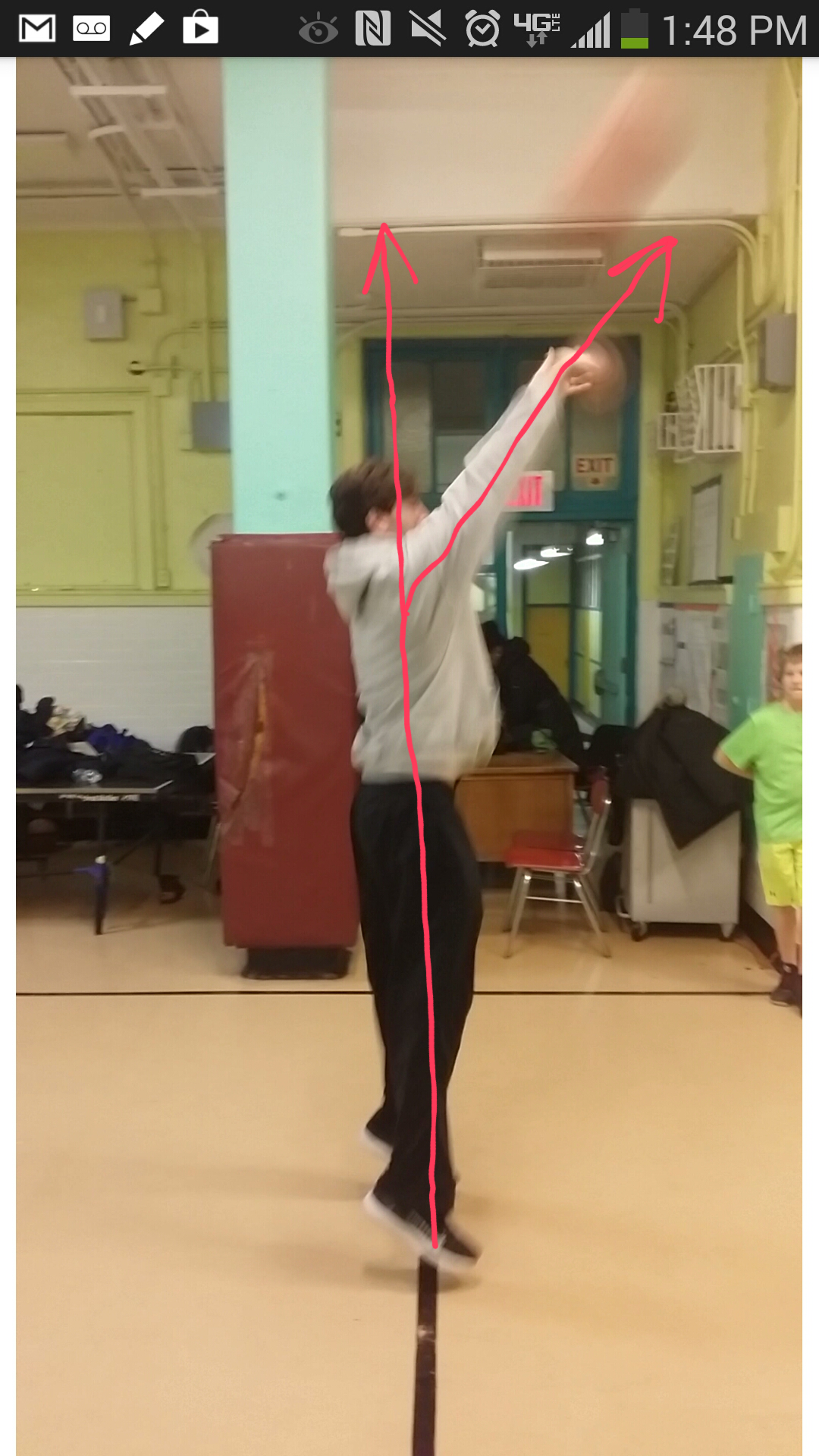 by Emily Faulkner
 by Brooke Lieb
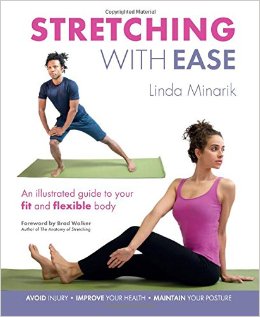
Linda Minarik is a pianist, dancer, singer, and fitness professional. Her new book is entitled Stretching with Ease. Linda has been familiar with the Alexander Technique for nearly 40 years. Her first private lessons were with ACAT alumna Linda Babits in connection with practicing piano with ease. Linda’s life-long love of movement inspired her to train in ballet, and to become a certified group fitness instructor, including teaching qualifications in Gyrokinesis® and the MELT Method®.
by Brooke Lieb
Linda Minarik is a pianist, dancer, singer, and fitness professional. Her new book is entitled Stretching with Ease. Linda has been familiar with the Alexander Technique for nearly 40 years. Her first private lessons were with ACAT alumna Linda Babits in connection with practicing piano with ease. Linda’s life-long love of movement inspired her to train in ballet, and to become a certified group fitness instructor, including teaching qualifications in Gyrokinesis® and the MELT Method®. by Cate McNider
 by Brooke Lieb
 by Karen Krueger
In
by Karen Krueger
In  by Marta Curbelo
I always loved movement and dance. I became a “star” in my brand new elementary school when I danced in front of my father’s Latin band at a school assembly. As a stay-at-home mom, I missed dance. When Nicole was eight, I decided to get active again: I joined The Nickolaus Technique exercise classes. After a few years of taking classes, I became an instructor and gave classes. One of the franchise owners was training at ACAT and asked me to volunteer as his student. At the time, I was about to buy a Nickolaus franchise. After volunteering at ACAT and experiencing a lightness I had never before felt, I started The Alexander Technique lessons with Sarnie Ogus and my life changed. Forget about the Nickolaus franchise, this was for me. My then-husband was going to be assigned to London and I knew I could find a home in England with The Alexander Technique. We never made it to London, but I have been able to teach The Alexander Technique wherever I found myself: New York City, Stamford CT or Santa Fe NM; even being invited to give annual workshops in Italy and Switzerland over a six-year period.
by Marta Curbelo
I always loved movement and dance. I became a “star” in my brand new elementary school when I danced in front of my father’s Latin band at a school assembly. As a stay-at-home mom, I missed dance. When Nicole was eight, I decided to get active again: I joined The Nickolaus Technique exercise classes. After a few years of taking classes, I became an instructor and gave classes. One of the franchise owners was training at ACAT and asked me to volunteer as his student. At the time, I was about to buy a Nickolaus franchise. After volunteering at ACAT and experiencing a lightness I had never before felt, I started The Alexander Technique lessons with Sarnie Ogus and my life changed. Forget about the Nickolaus franchise, this was for me. My then-husband was going to be assigned to London and I knew I could find a home in England with The Alexander Technique. We never made it to London, but I have been able to teach The Alexander Technique wherever I found myself: New York City, Stamford CT or Santa Fe NM; even being invited to give annual workshops in Italy and Switzerland over a six-year period. by Daniel Singer
As a young man in my 20’s and well out of college, I was continuing with the spiritual search I had consciously begun at age 15. So as it happened, I found myself living in upstate New York on a rural farm, with a serious group of spiritual seekers. We were studying, in a practical way, the ideas of Gurdjieff. This farm/craft guild was an extraordinarily impactful learning environment, centered around traditional arts like pottery, weaving, woodworking, printing, farming, home-crafts, etc. We were studying the ideas of Gurdjieff; and working at traditional crafts was part of a means we used for self-study. I myself became a glassblower artisan there, and made this community my home for 6 years.
by Daniel Singer
As a young man in my 20’s and well out of college, I was continuing with the spiritual search I had consciously begun at age 15. So as it happened, I found myself living in upstate New York on a rural farm, with a serious group of spiritual seekers. We were studying, in a practical way, the ideas of Gurdjieff. This farm/craft guild was an extraordinarily impactful learning environment, centered around traditional arts like pottery, weaving, woodworking, printing, farming, home-crafts, etc. We were studying the ideas of Gurdjieff; and working at traditional crafts was part of a means we used for self-study. I myself became a glassblower artisan there, and made this community my home for 6 years. by Kim Jessor
It was 1977. I had recently graduated from college, and had come to New York to be a dancer. I was living in Soho, taking dance classes, rehearsing and performing in lofts, and living the downtown New York arty life I had dreamed of. But then my knees began to give me trouble. Like F. M. Alexander, the medical world had no answers for me, nothing showed up on an x-ray, rest was advised. I was desperate; the life I had envisioned, the great joy dancing brought me and how much my young identity was tied up in it, seemed to be slipping away from me. At Sarah Lawrence College I had known Missy Vineyard. I knew she had become an Alexander teacher, and I had another dancer friend with knee trouble who was studying with Missy. They were the first people to tell me of this work that would change my life. I don’t remember clearly how I found my way to Jessica Wolf for my first lesson. She was still in her final semester of training. Once I went with her for a supervisory lesson to Judy Liebowitz’s (one of ACAT’s founders) apartment!
by Kim Jessor
It was 1977. I had recently graduated from college, and had come to New York to be a dancer. I was living in Soho, taking dance classes, rehearsing and performing in lofts, and living the downtown New York arty life I had dreamed of. But then my knees began to give me trouble. Like F. M. Alexander, the medical world had no answers for me, nothing showed up on an x-ray, rest was advised. I was desperate; the life I had envisioned, the great joy dancing brought me and how much my young identity was tied up in it, seemed to be slipping away from me. At Sarah Lawrence College I had known Missy Vineyard. I knew she had become an Alexander teacher, and I had another dancer friend with knee trouble who was studying with Missy. They were the first people to tell me of this work that would change my life. I don’t remember clearly how I found my way to Jessica Wolf for my first lesson. She was still in her final semester of training. Once I went with her for a supervisory lesson to Judy Liebowitz’s (one of ACAT’s founders) apartment!
 by Brooke Lieb
The Alexander Technique teaches a robust tool to recognize and address habits, including movement patterns, posture and muscle tone; and thinking and behavioral habits, as well.
by Brooke Lieb
The Alexander Technique teaches a robust tool to recognize and address habits, including movement patterns, posture and muscle tone; and thinking and behavioral habits, as well.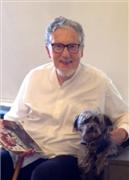 by Brooke Lieb
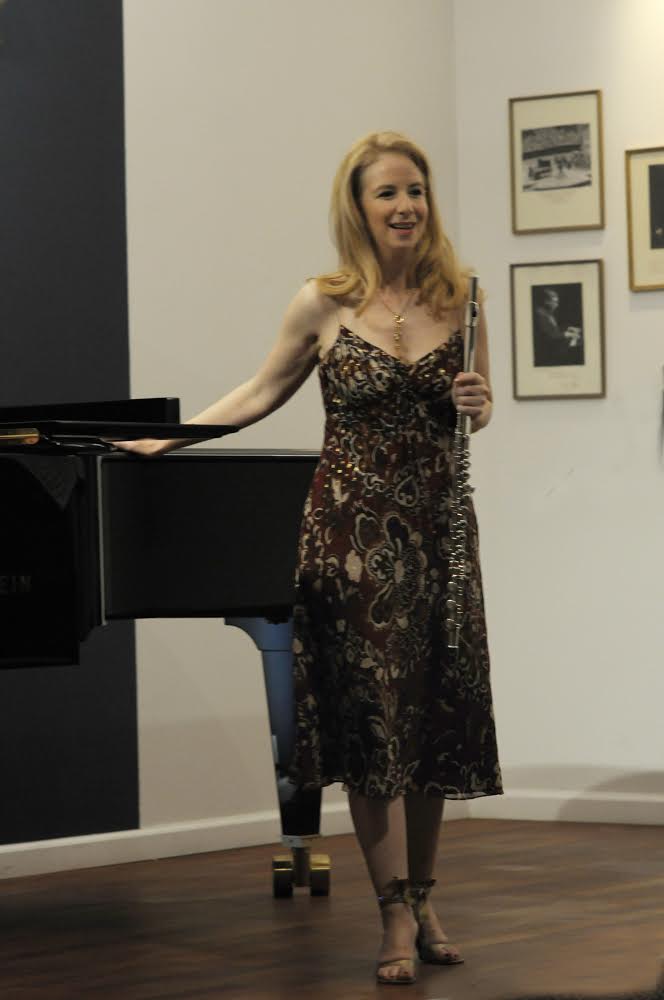 by Brooke Lieb
ACAT’s
by Brooke Lieb
ACAT’s 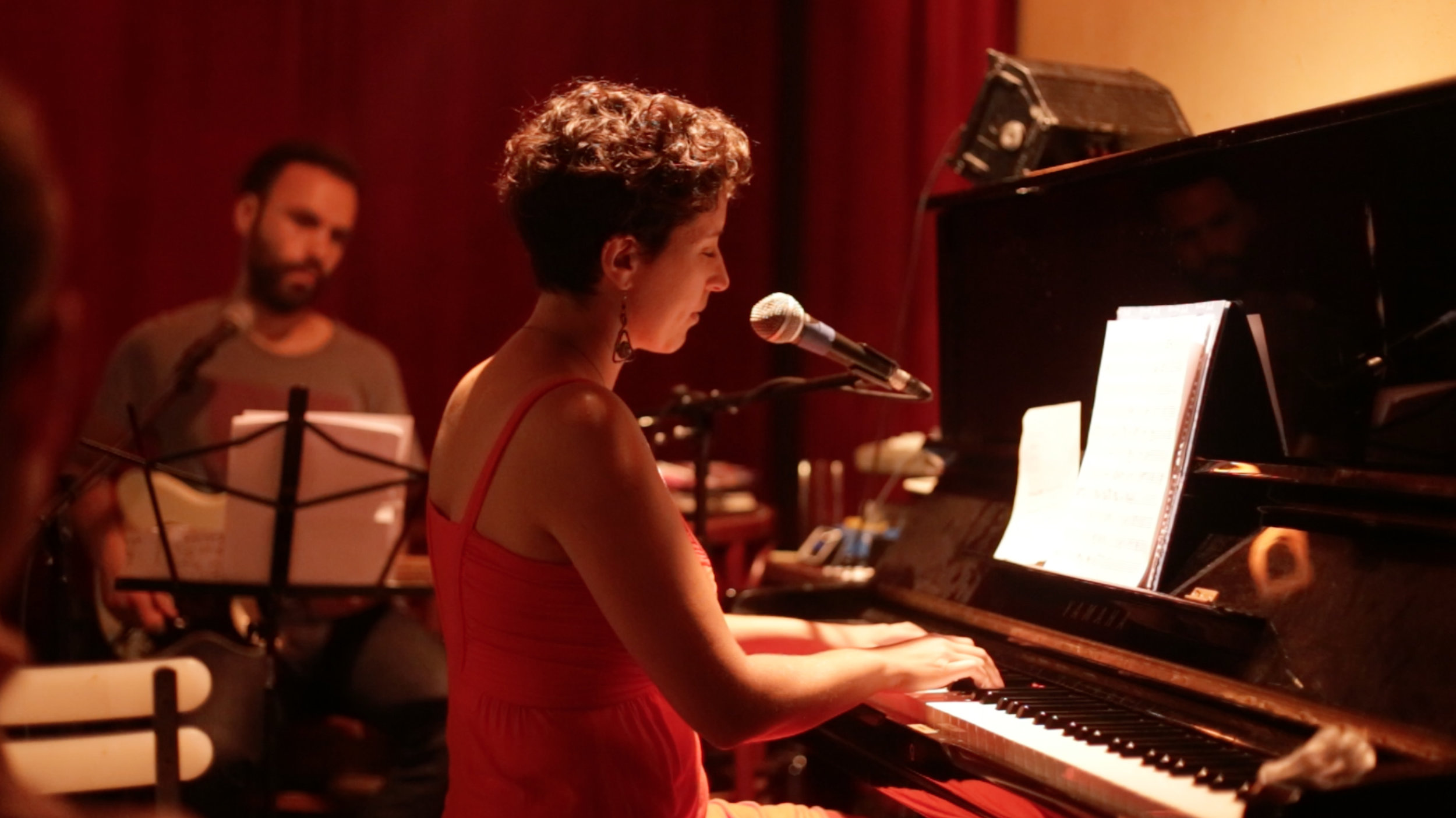 By Mariel Berger
[Many thanks to my Alexander Technique teacher, Witold Fitz-Simon, and my Alexander Technique Psychologist, Jane Dorlester]
By Mariel Berger
[Many thanks to my Alexander Technique teacher, Witold Fitz-Simon, and my Alexander Technique Psychologist, Jane Dorlester]